

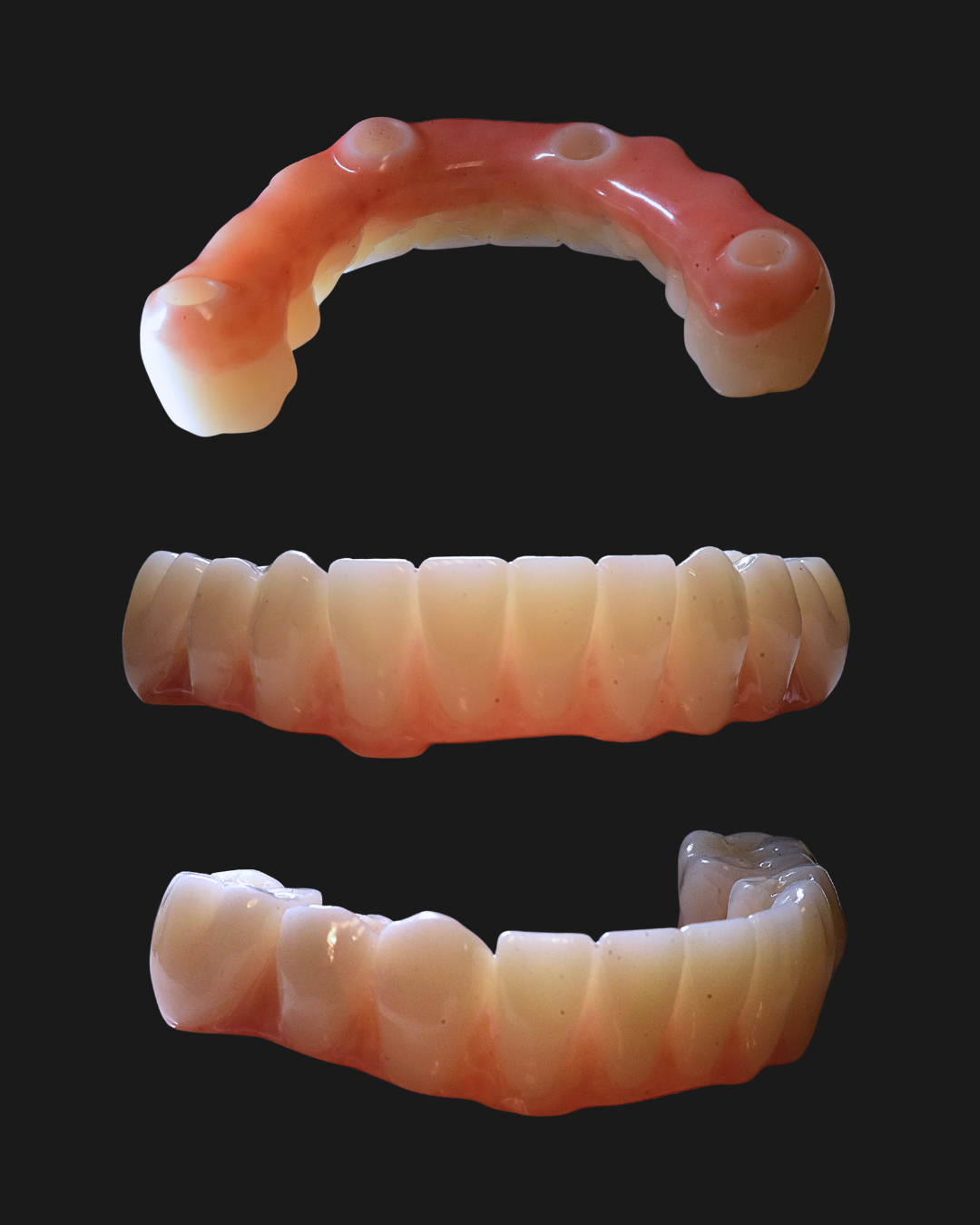
All-on-4 Implants: Understanding Your Prosthesis Material Options
Choosing the right material for your All-on-4 implants is about more than looks. Learn how acrylic, composite, porcelain, and zirconia affect durability, hygiene, and long-term implant health.
All-on-4 Implants: Understanding Your Prosthesis Material Options
If you’re considering All-on-4 dental implants, you’ve probably heard your dentist mention different materials for your new teeth. The choice of material isn’t just about how your smile looks — it also affects your comfort, oral health, and how long your prosthesis will last. In this article, we’ll break down the main materials used for All-on-4 prostheses, explain their pros and cons, and help you understand what’s best for your mouth and lifestyle.
What is an All-on-4 Prosthesis?
Before we dive into materials, let’s quickly review what an All-on-4 prosthesis is.
All-on-4 is a treatment for people who are missing most or all of their teeth in one arch (upper or lower).
It uses four strategically placed dental implants to support a full arch of teeth.
The prosthesis can be made from different materials, each with its own strengths, longevity, and maintenance requirements.
Choosing the right material is important because it impacts how clean your teeth stay, how durable your prosthesis is, and how your gums and bone respond over time.
The Main Material Options
1. Acrylic Hybrid Prosthesis (PMMA)
What it is:
Acrylic is a type of resin, similar to the material used in dentures.
It’s often combined with a metal bar underneath for support.
Pros:
Lightweight and comfortable.
Easy to repair or adjust if something breaks.
Usually less expensive upfront.
Often used as a temporary or “conversion” prosthesis after implant surgery.
Cons:
Porous material: absorbs bacteria, odors, and stains over time.
High plaque retention: more likely to cause gum inflammation if cleaning isn’t perfect.
Wears down faster than other materials, especially for people who grind or clench their teeth.
Best for:
Temporary or transitional prosthesis.
Patients with excellent oral hygiene who want a lower-cost option.
2. Composite Hybrid Prosthesis
What it is:
Composite materials are a type of modern resin that’s reinforced with ceramic particles.
Often combined with a metal or titanium substructure.
Pros:
Less porous than acrylic, so it accumulates less plaque.
More durable and wear-resistant than acrylic.
Can be polished to a smooth finish, which is gentler on gums and opposing teeth.
Cons:
Still resin-based, so some plaque retention and staining can occur.
Repairs are easier than porcelain or zirconia, but not as simple as acrylic.
May need replacement sooner than zirconia.
Best for:
Mid-term prosthesis.
Patients who want a balance between cost, durability, and hygiene.
3. Porcelain on Titanium Framework
What it is:
Porcelain teeth are layered onto a strong titanium framework.
This is sometimes called a “metal-ceramic” prosthesis.
Pros:
Beautiful esthetics: porcelain can mimic natural tooth translucency and shading.
Very strong under normal bite forces.
Long clinical history — dentists have been using this approach for decades.
Cons:
Cement or veneer interfaces: the junction between porcelain and titanium can trap bacteria if not perfectly sealed.
Porcelain can chip over time, especially in patients who grind their teeth.
Harder to repair than acrylic or composite.
Best for:
Patients with high esthetic demands.
Those who want predictable long-term fit and passive implant support.
4. Monolithic Zirconia Prosthesis
What it is:
A prosthesis milled from a single block of zirconia, a very hard ceramic.
Can be full-arch zirconia or zirconia bonded over a titanium framework.
Pros:
Best biologic option: non-porous, highly polishable, and resistant to plaque buildup.
Extremely durable: rarely chips or fractures.
Ideal for bruxers: strong enough to withstand grinding or clenching.
Can look natural with proper shading and characterization.
Cons:
Very rigid — transmits biting forces directly to implants, so occlusion and implant placement must be precise.
Difficult to modify or repair chairside.
Higher cost than acrylic or composite.
Best for:
Long-term definitive prosthesis.
Patients with history of gum disease, high plaque risk, or heavy bite forces.
Anyone who wants the cleanest, most durable option.
5. Zirconia on Titanium Framework
What it is:
A hybrid approach: a zirconia shell is bonded over a titanium substructure.
Aims to combine zirconia’s hygiene benefits with titanium’s mechanical reliability.
Pros:
Smooth zirconia surface for optimal gum health.
Titanium bar absorbs stress and improves fit over long spans.
Easier to repair the framework if the zirconia shell chips.
Cons:
Cement or bonding layer can trap bacteria if not done perfectly.
Slightly more technique-sensitive than full monolithic zirconia.
Bulkier than monolithic zirconia, which may make cleaning slightly harder.
Best for:
Patients needing both high esthetics and long-span mechanical strength.
Bruxers with challenging bite forces.
Complex implant cases with angled or misaligned implants.
How Material Choice Affects Your Oral Health
The health of your gums and implants isn’t just about brushing and flossing — it’s also about what your teeth are made of:
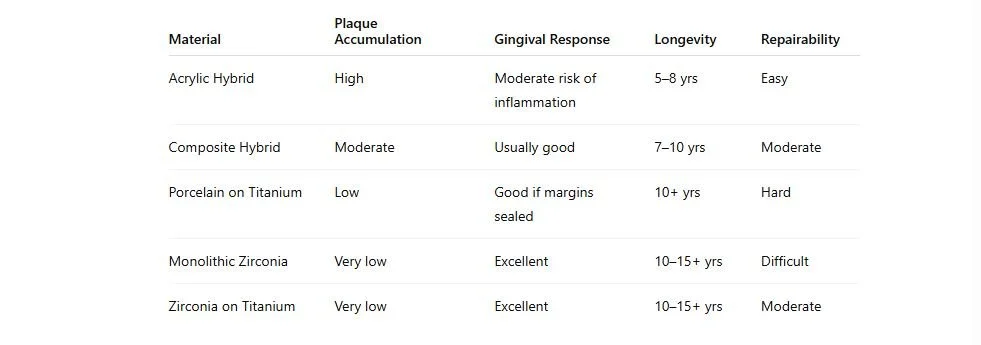
Key takeaway: smooth, non-porous surfaces (zirconia, porcelain) are healthiest for your gums. Porous resins (acrylic, composite) require extra attention to prevent gum inflammation and plaque buildup.
Maintenance Considerations
Regardless of material, your prosthesis needs regular care:
Daily home care: water flosser, soft toothbrush under the prosthesis, low-abrasive toothpaste.
Professional cleanings: 3–4 times per year to remove any biofilm under the prosthesis.
Check-ups: regular evaluation of implants, gums, and bite forces.
Occlusion: especially important for bruxers — even the strongest prosthesis can fail if biting forces are not well-distributed.
Monolithic zirconia and zirconia-on-titanium generally require less frequent adjustments and tolerate grinding better than acrylic or porcelain.
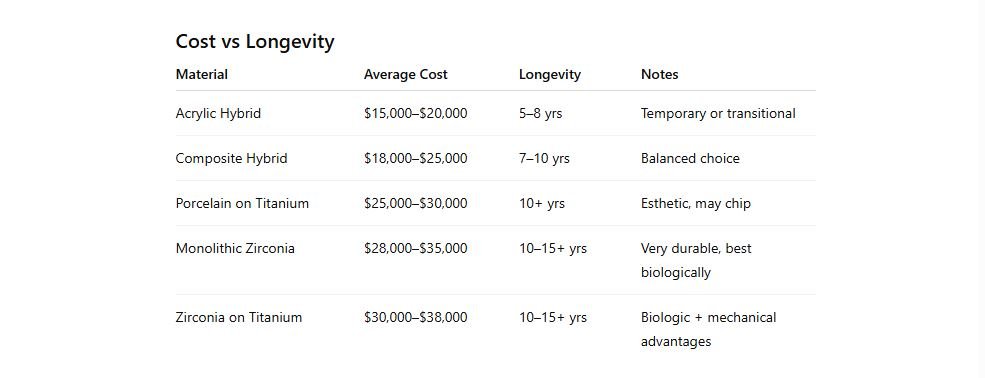
Investing in a higher-end prosthesis may save money long-term by reducing repairs, protecting implants, and minimizing gum inflammation.
How to Choose the Right Material
When deciding, your dentist will consider:
Oral hygiene habits
Bite forces / bruxism
Esthetic expectations
Bone quality and implant placement
Budget and long-term planning
Rule of thumb:
Acrylic → short-term / transitional
Composite → mid-term
Porcelain → esthetic-focused long-term
Monolithic zirconia → hygiene-focused long-term
Zirconia on titanium → high-strength, esthetic compromise
Final Thoughts
All-on-4 implants can transform your smile and your quality of life. Choosing the right prosthetic material ensures your new teeth last, stay healthy, and feel natural.
Monolithic zirconia and zirconia on titanium frameworks are generally best for long-term hygiene and durability.
Porcelain is unbeatable for esthetics but can chip under heavy forces.
Composite and acrylic hybrids are budget-friendly but require careful hygiene and more frequent replacement.
Ultimately, the “best” material depends on your mouth, lifestyle, and priorities. Discuss your options with your dentist, and consider not just appearance, but biologic health, durability, and maintenance.
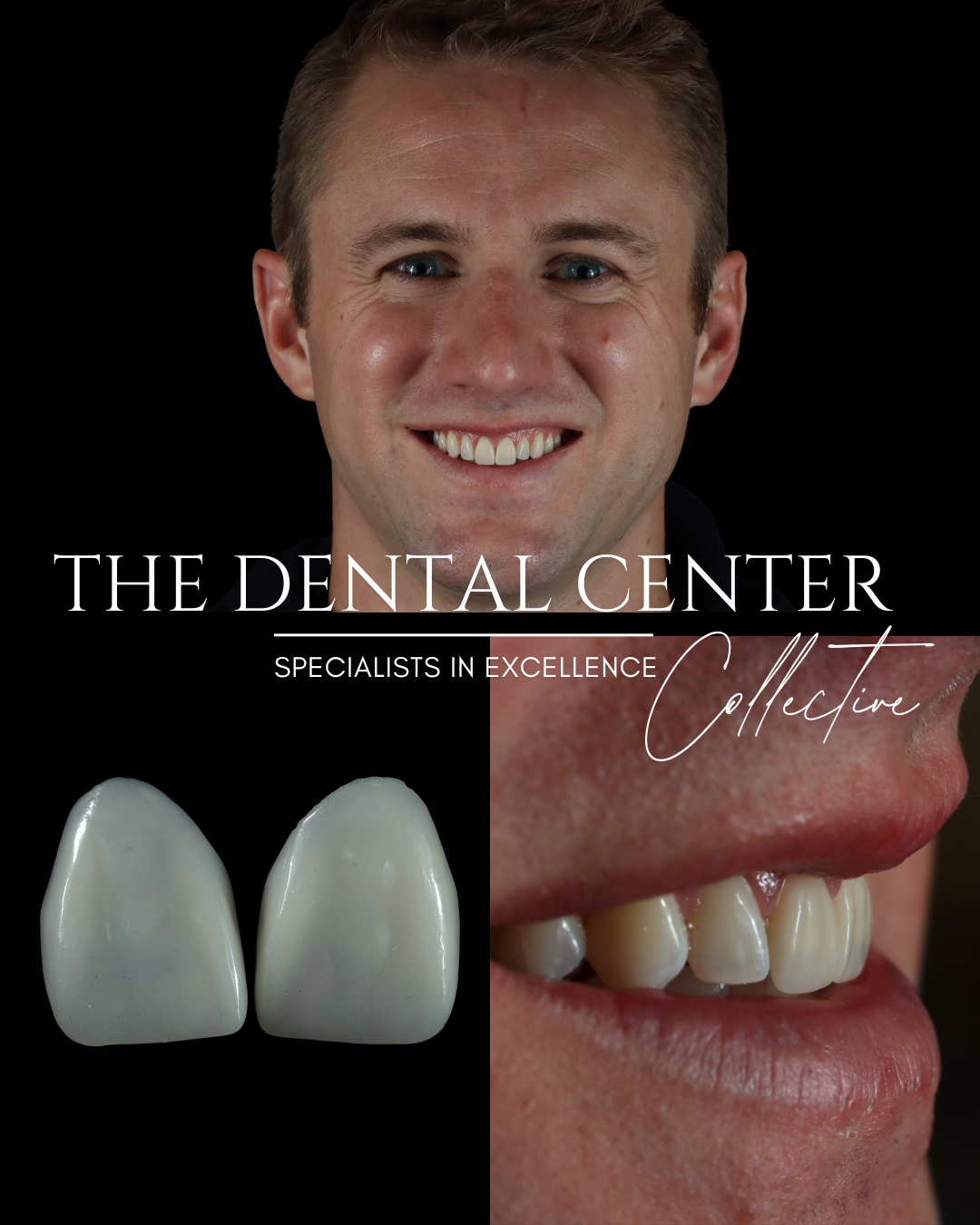
Dental Veneers: What They Are, How They Work, and Whether They’re Right for You
Learn what dental veneers are, how they work, their benefits, lifespan, and whether they’re right for your smile. A complete patient guide to porcelain veneers.
If you’ve ever wished your teeth were whiter, straighter, or more even, you’re not alone. Dental veneers are one of the most popular cosmetic dentistry treatments because they can dramatically improve a smile while still looking natural.
But veneers are also one of the most misunderstood procedures. Many patients wonder:
Are veneers fake looking?
Do they ruin your teeth?
How long do they last?
Are they just for celebrities?
In this guide, we’ll explain what dental veneers are, who they’re for, how the process works, and what you should know before deciding if veneers are right for you.
What Are Dental Veneers?
Dental veneers are thin shells of porcelain or composite resin that are bonded to the front surface of your teeth. They are custom-made to match your natural teeth in color, shape, and size.
Veneers are designed to improve the appearance of teeth that are:
Chipped or worn
Discolored or stained
Uneven or misshapen
Gapped
Slightly crooked
Restored with large old fillings
Damaged from trauma
Unlike crowns, which cover the entire tooth, veneers only cover the front surface. This allows for a more conservative and cosmetic-focused approach.
What Problems Can Veneers Fix?
Veneers are extremely versatile. They are commonly used to treat:
1. Discoloration That Won’t Whiten
Some stains don’t respond to whitening, especially:
Tetracycline staining
Deep internal discoloration
Dark teeth from trauma or root canal treatment
Veneers can mask these stains and create a permanently brighter smile.
2. Chipped or Broken Teeth
Teeth that are chipped from wear, grinding, or trauma can often be restored with veneers rather than crowns.
3. Gaps Between Teeth
Small spaces between teeth can be closed with veneers without orthodontics in certain cases.
4. Uneven or Worn Teeth
Over time, teeth can become shorter or flatter due to grinding or acid wear. Veneers can restore length and symmetry.
5. Mild Crookedness
For patients who want fast cosmetic improvement and are not candidates for orthodontics, veneers can sometimes visually straighten teeth.
Types of Veneers
Porcelain Veneers
Porcelain veneers are the most durable and natural-looking option.
Benefits:
Highly stain resistant
Strong and long-lasting
Very natural translucency
Custom crafted by a dental lab
Porcelain veneers typically last 10–15 years or longer with good care.
2. Composite Veneers
Composite veneers are made from tooth-colored resin and placed directly on the teeth.
Benefits:
Less expensive than porcelain
Can often be done in one visit
Less tooth reduction required
They do not last as long as porcelain veneers and may stain over time.
The Veneer Process: Step by Step
One of the biggest fears patients have is not knowing what to expect. Here’s how the veneer process usually works:
Step 1: Consultation and Smile Planning
This is the most important step. Your dentist will:
Examine your teeth and bite
Take photos and digital scans
Discuss your goals
Evaluate gum health and jaw function
In many practices, digital smile design or mockups can show you what your new smile may look like before any work is done.
Step 2: Tooth Preparation
A small amount of enamel is removed from the front of the teeth to make room for the veneers. This ensures they don’t look bulky.
Local anesthesia is used, and the procedure is typically comfortable.
Step 3: Temporary Veneers
Temporary veneers are placed while your permanent veneers are being made. These allow you to:
Preview your smile
Test function and comfort
Give feedback on shape and size
Step 4: Final Veneer Placement
When the permanent veneers arrive:
They are tried in for fit and color
Adjustments are made
They are permanently bonded in place
This appointment usually takes 1–2 hours.
Do Veneers Look Natural?
When properly designed, veneers should not look fake. The most natural veneers:
Have slight translucency
Are shaped to match your face
Follow natural tooth proportions
Respect your bite and lip movement
Problems happen when veneers are:
Too thick
Too white
Poorly shaped
Placed without proper planning
A skilled cosmetic dentist will design veneers that look like healthy natural teeth — not “piano keys.”
Do Veneers Damage Your Teeth?
This is a common myth. Veneers do not ruin healthy teeth when properly planned and placed.
However, it is important to understand:
Veneers are not reversible
Enamel is permanently altered
Teeth will always need some form of coverage after veneers
That’s why proper case selection is critical. Veneers should only be placed when:
Teeth are structurally healthy
Gum health is stable
Bite forces are controlled
Long-term maintenance is understood
In the right hands, veneers can actually protect weakened or worn teeth.
How Long Do Veneers Last?
Porcelain veneers typically last 10–15 years, and sometimes longer.
Their lifespan depends on:
Oral hygiene
Grinding or clenching habits
Diet (hard foods, ice chewing)
Regular dental visits
Patients who grind their teeth may need a night guard to protect their veneers.
Are Veneers Painful?
Most patients report little to no pain during the veneer process.
Local anesthesia is used during tooth preparation
Temporary veneers protect the teeth
Sensitivity is usually mild and temporary
If sensitivity occurs, it typically resolves within days to weeks.
Who Is a Good Candidate for Veneers?
You may be a good candidate if:
Your teeth are healthy
Your gums are healthy
You want cosmetic improvement
You understand long-term maintenance
You don’t have uncontrolled grinding
You have realistic expectations
You may not be a candidate if:
You have advanced gum disease
You have untreated decay
You have severe bite problems
You grind heavily without protection
In those cases, other treatments may be recommended first.
Veneers vs. Crowns: What’s the Difference?
VeneersCrownsCover the front surfaceCover the entire toothMore conservativeMore tooth reductionPrimarily cosmeticCosmetic and structuralBest for healthy teethBest for damaged teeth
Your dentist will recommend the option that best protects your tooth long-term.
Veneers vs. Whitening
Teeth whitening can brighten natural teeth, but:
It cannot fix shape
It cannot fix chips
It cannot fix alignment
It cannot mask deep stains
Veneers can change:
Color
Shape
Size
Symmetry
Alignment appearance
For some patients, whitening is enough. For others, veneers provide a more complete transformation.
Caring for Veneers
Veneers are cared for like natural teeth:
Brush twice daily
Floss daily
Avoid biting hard objects
Wear a night guard, if recommended
See your dentist regularly
They cannot decay, but the underlying tooth can. Good hygiene is essential.
Common Myths About Veneers
Myth: Veneers look fake
Truth: Poorly done veneers look fake. Well-designed veneers look natural.
Myth: Veneers are only for celebrities
Truth: Veneers are common among everyday patients who want to improve their smile.
Myth: Veneers always require shaving teeth down to pegs
Truth: Modern veneers require minimal enamel reduction in many cases.
Myth: Veneers are purely cosmetic and unnecessary
Truth: Veneers can restore function and protect damaged teeth in addition to improving appearance.
Is Getting Veneers a Big Decision?
Yes — and it should be.
Veneers are a long-term investment in your smile and your oral health. A good veneer plan should consider:
Facial balance
Gum health
Bite stability
Longevity
Maintenance
Esthetics
This is not a one-size-fits-all procedure.
Final Thoughts: Are Veneers Worth It?
For the right patient, veneers can be life-changing. They can:
Improve confidence
Restore worn or damaged teeth
Create a balanced, healthy-looking smile
Provide long-lasting results
But they should never be rushed or poorly planned. The best results come from careful diagnosis, conservative preparation, and thoughtful design.
If you’re considering veneers, the most important step is a thorough consultation with a dentist who understands both esthetics and function.
Frequently Asked Questions About Veneers
How many veneers do I need?
It depends on your smile. Some patients need only two veneers, others need six to ten for symmetry.
Can veneers fall off?
Properly bonded veneers rarely fall off. Trauma or grinding can increase the risk.
Can I whiten veneers later?
No. Veneers do not whiten. Color must be chosen carefully before placement.
Are veneers covered by insurance?
Most veneers are considered cosmetic and not covered, though exceptions exist when restoring damaged teeth.
Ready to Take the Next Step?
A veneer consultation allows your dentist to evaluate your teeth, discuss your goals, and determine whether veneers are the right solution for your smile.
A great smile is not about perfection — it’s about balance, health, and confidence.