

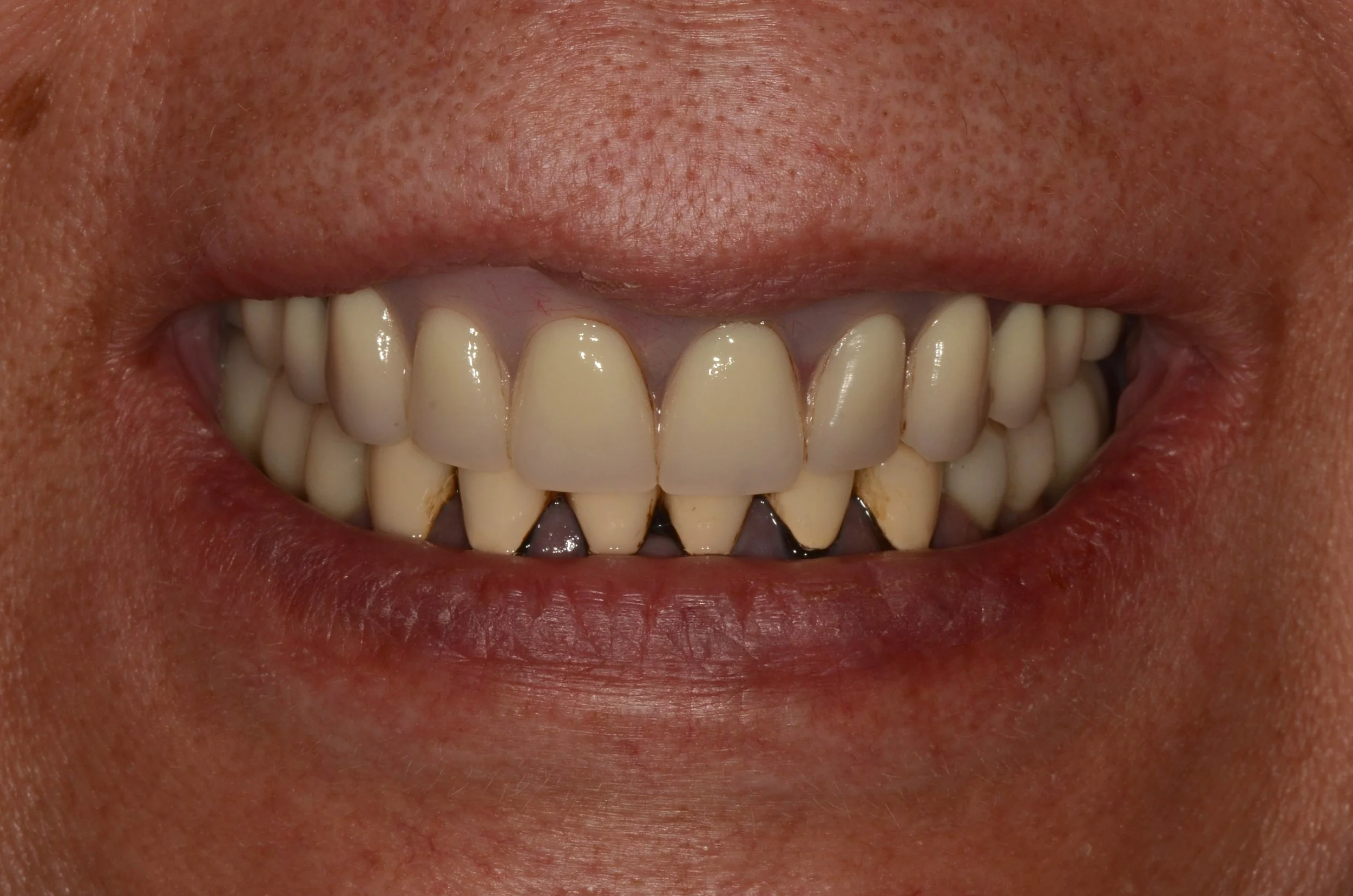
Why Full-Arch Dental Implants Sometimes Fail — and How an Experienced Team Can Fix Them
Learn why full-arch dental implants can fail, common complications, and how experienced dental teams correct and prevent problems long-term.
Full-arch dental implants (often called “All-on-4” or “teeth in a day”) have transformed dentistry. For many people who have struggled with loose dentures or failing teeth, this treatment can restore the ability to eat comfortably, speak clearly, and smile with confidence.
When done properly, full-arch treatment can be life-changing.
But it is also one of the most complex procedures in dentistry. And like any complex medical treatment, complications can occur.
Some patients come to us after treatment elsewhere and say:
“My teeth keep breaking.”
“My bite feels off.”
“I was told this would last forever.”
“I’m embarrassed to smile.”
“I don’t know who to go to anymore.”
These patients often feel frustrated, confused, or even ashamed — as if they did something wrong.
In most cases, they didn’t.
Full-arch treatment is not just about placing implants. It is a long-term dental rehabilitation involving surgery, prosthetics, bite design, materials, and maintenance. When any part of that system is overlooked, problems can develop months or years later.
This article explains:
• why full-arch complications happen
• what warning signs to look for
• and how experienced teams correct and prevent these problems
Our goal is not to criticize other providers. It is to help patients understand what truly determines long-term success.
Full-Arch Treatment Is a System, Not a Single Procedure
Many people assume full-arch treatment is mainly about surgery. In reality, implant placement is only the foundation.
The teeth that attach to the implants must:
fit passively without strain
distribute biting forces evenly
support natural speech
look proportionate to the face
allow proper cleaning
resist wear and fracture
protect the implants from overload
Clinical studies consistently show that long-term success depends not only on implant survival, but on prosthetic design, occlusion (bite), and hygiene access.
In simple terms:
The implants hold the teeth — but the teeth determine whether the implants last.
This is why planning must start with the final teeth, not just with where implants can be placed in bone.
Common Problems Seen in Struggling or Failed Full-Arch Cases
1. Fractured or Worn Teeth
One of the most common complications is broken or severely worn prosthetic teeth.
Contributing factors include:
heavy bite forces or grinding
imbalanced occlusion
thin prosthetic materials
insufficient implant support
lack of night protection
Acrylic and composite teeth, which are often used in provisional or economy restorations, are known to wear faster under heavy forces. Even stronger materials can fail if the bite is not designed properly.
Patients often assume breakage is unavoidable. In reality, repeated fractures usually point to a design or bite problem rather than simple bad luck.
2. Bite Problems and Jaw Discomfort
A full-arch restoration must distribute chewing forces evenly across implants and jaw joints.
When it does not:
implants may loosen
screws can fracture
jaw muscles fatigue
headaches may develop
chewing feels strained
These problems often appear gradually, not immediately after surgery. Over time, the muscles and joints compensate for an imbalanced bite until symptoms develop.
3. Speech and Aesthetic Concerns
The position and thickness of prosthetic teeth strongly affect speech and facial appearance.
Improper design may lead to:
lisping or whistling
bulky or unnatural contours
food trapping
lip distortion
poor facial support
Speech problems are rarely caused by the implants themselves. They are usually caused by tooth position and prosthetic shape.
4. Hygiene Difficulties and Inflammation
Studies show that long-term implant health depends heavily on plaque control.
If a prosthesis is difficult to clean:
inflammation can develop
odor and bad taste may occur
bone loss can follow
infections may develop
Many patients are told simply to “use a Waterpik,” without individualized instruction or professional maintenance. Design and hygiene education are equally important.
5. Implant Loss
Reported long-term implant survival rates for full-arch treatment are generally high (often above 90% over 5–10 years in controlled studies), but failures do occur.
Implant loss is more commonly associated with:
overload from poor bite design
untreated inflammation
smoking
uncontrolled diabetes
poor oral hygiene
prosthetic misfit
When implants fail, patients experience both emotional distress and financial burden — especially if they believed the solution was permanent.
Why These Problems Occur
Most complications arise from one or more of the following:
1. Surgery-First Planning
In some treatment models, implants are placed first and teeth are designed afterward.
This approach can work, but it increases risk if prosthetic design is not carefully planned in advance. When implants are placed without regard to the final tooth position, the prosthesis must adapt — sometimes poorly.
Prosthetic-driven planning reduces the need for compromise.
2. Standardized Prosthetic Designs
Every patient has different:
facial proportions
muscle strength
jaw shape
bite pattern
speech dynamics
Standardized arches save time, but they reduce customization. What works well for one patient may be inappropriate for another.
Long-term success depends on individualized design.
3. Lack of Long-Term Maintenance
Full-arch restorations are not “maintenance-free.”
They require:
professional cleaning
screw and implant monitoring
bite adjustments
evaluation of wear
hygiene coaching
Without follow-up care, even well-designed restorations can fail prematurely.
Can Failed Full-Arch Cases Be Corrected?
In many cases, yes.
However, revision treatment is often more complex than initial treatment.
It may involve:
redesigning the prosthesis
replacing materials
correcting bite relationships
treating infections
repositioning implants
rebuilding bone
retraining hygiene techniques
Correcting a case requires understanding why it failed, not simply replacing what broke.
What Defines a “Fix-It” Office?
Offices experienced in revision and complication management typically:
✔ Plan prosthetically first
✔ Analyze failures instead of repeating them
✔ Customize each case
✔ Monitor patients long-term
✔ Educate patients honestly
✔ Expect complexity
Seeing difficult cases does not mean poor quality. It means the team understands real-world challenges — and how to prevent them.
Questions to Ask Before Choosing a Provider
Patients should ask:
• Who designs my teeth?
• Is my bite planned before surgery?
• How will speech be evaluated?
• What materials will be used and why?
• Who manages maintenance?
• What happens if something breaks?
• What is the plan if an implant fails?
The quality of the answers matters more than how fast the surgery can be done.
A Word About Cost
Lower-cost treatment often focuses on:
implant placement
standardized prosthetics
limited follow-up
Comprehensive care includes:
extensive planning
customized design
multiple prototypes
long-term maintenance
in-house management of complications
The true cost is not what is paid initially — it is what must be paid if treatment fails.
Our Philosophy
We believe full-arch treatment should be:
• designed before it is placed
• tested before it is finalized
• monitored for life
• customized for each patient
• managed by a coordinated team
• built to function, not just to look good
Some patients come to us for their first full-arch restoration.
Others come because something did not work elsewhere.
Both deserve careful planning and honest guidance.
The Bottom Line
Full-arch dental implants can be life-changing — but they are not simple.
When problems occur, they usually result from design, bite, or maintenance issues that develop over time.
The good news is:
many problems are preventable
many failures can be corrected
experienced teams can manage complex cases
If you are considering full-arch treatment — or struggling with an existing restoration — seek care from a team that treats this as a long-term rehabilitation, not just a surgical procedure.
Your smile is not a product.
It is a system.
And systems require thoughtful design.